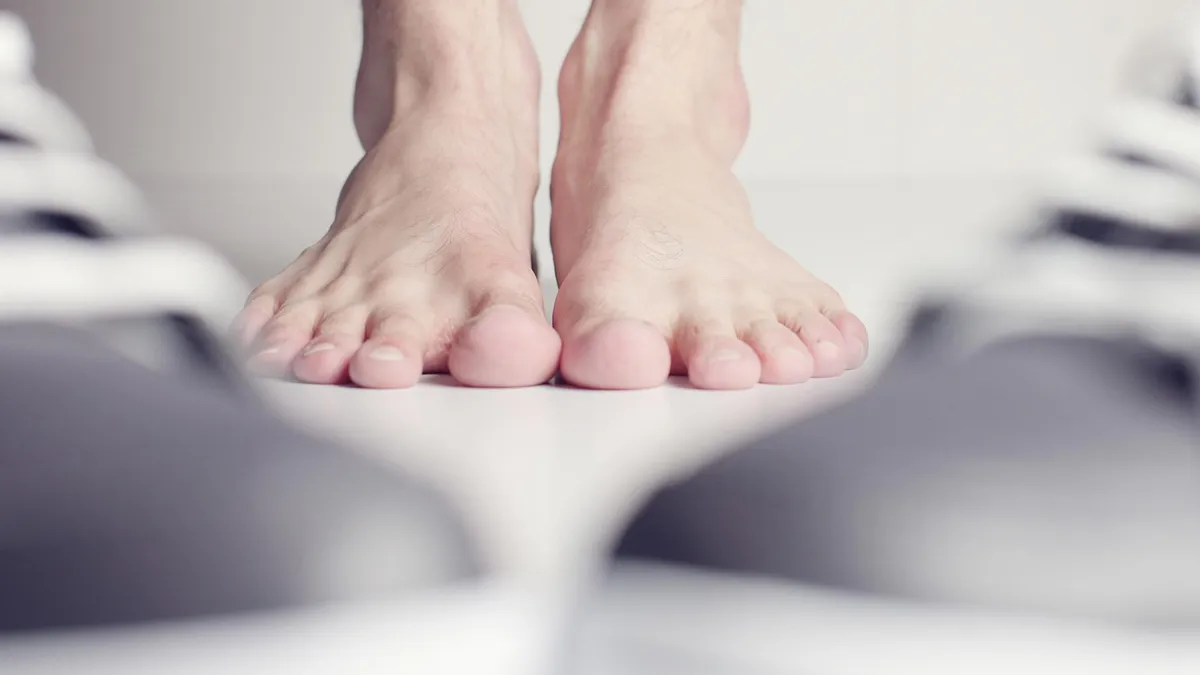
Yes, barefoot shoes help relieve the mechanical pressure that causes or worsens ingrown toenails and toe crowding. By replacing narrow, tapered toe boxes with an anatomically shaped forefoot, barefoot footwear removes lateral compression against the nail border, supports natural forefoot splay, and encourages proper hallux valgus alignment during everyday walking.
Key Takeaways
Switching from tapered conventional sneakers to wide toe box barefoot shoes removes the chronic lateral compression responsible for recurring nail-fold irritation and compressed toes.
-
Tapered toe boxes pinch the big toe inward and jam soft skin against the sharp lateral edge of the nail plate, whereas anatomical foot-shaped shoes leave space for toes to spread flat.
-
Zero-drop soles prevent bodyweight from sliding forward into the front wall of the shoe, protecting both the hallux and pinky toe during steep descents or brisk urban commutes.
-
For Malaysian feet with a wider forefoot and lower arches, accommodating afternoon heat swelling by sizing properly prevents rubbing without forcing wearers into overly long narrow shoes.
-
Local and direct-to-consumer options make transitioning affordable in Malaysia, from Saguaro models starting at RM84 on sale (with 10% off using code SUBIMPACT) to local-stock Atlas Originals at RM150–RM250.
-
Barefoot footwear helps prevent pressure-driven recurrence, though any acutely infected ingrown toenail still requires assessment and treatment from a qualified clinician.
How Wide Toe Boxes Address Toe Crowding and Nail Pressure
Unrestricted forefoot splay restores natural hallux valgus alignment and prevents adjacent toes from forcing soft tissue against the medial and lateral edges of the toenail.
Conventional athletic and casual shoes typically taper sharply toward a central point. Even when a sneaker feels long enough at the tip, its narrow forefoot squeezes the first and fifth metatarsals inward toward the midline. Over months and years of daily wear, this constant lateral compression crowds the toes together, pushes the big toe toward the second toe, and disrupts healthy hallux valgus alignment. When the hallux angles inward, the adjacent second toe presses directly against the outer nail fold of the big toe, driving the edge of the nail plate deeper into surrounding skin with every step.
Two additional shoe-design features compound this problem in traditional footwear: elevated heels and upturned toe springs. An elevated heel shifts your center of gravity forward, causing the foot to slide down an internal ramp toward the narrowest part of the toe box. Meanwhile, a rigid toe spring holds the toes in slight passive extension, reducing the natural flattening and spreading motion that should occur during mid-stance. Together, these mechanics increase friction along the nail borders while weakening the small intrinsic muscles that stabilize each toe independently.
True barefoot shoes eliminate those mechanical stressors through three coordinated features:
-
Anatomical Foot-Shaped Toe Box: Widest at the tips of the toes rather than at the ball of the foot, allowing complete forefoot splay so each toe rests in its own lane without overlapping or squeezing.
-
Zero-Drop Platform: Keeps the heel and forefoot at the same height from the ground, stopping forward foot slide inside the shoe and preserving natural Achilles tendon elasticity through a full ankle range of motion.
-
Thin, Flexible Sole: Lets the arch load and recoil naturally, engaging plantar fascia mechanics during push-off instead of immobilizing the midfoot on stiff foam blocks.
These anatomical details carry particular weight for Asian and Malaysian foot shapes. Across Malaysia, many adults have a naturally broader forefoot, a higher-volume midfoot, and a notable prevalence of flat feet or lower medial arches. Buying standard narrow-lasted running shoes in a larger length only creates excess floppy material ahead of the toes without giving the forefoot and pinky toe true horizontal room. An anatomical barefoot last matches that wider forefoot geometry directly, easing sideways pressure on compressed nail beds while allowing the arch to strengthen organically.
Biomechanical Principle: A shoe fits an ingrown-prone foot only when you can wiggle and spread all five toes sideways inside the upper without the big toe or fifth toe touching the sidewalls.
Barefoot Shoe Options in Malaysia: Pricing and Landed Cost Comparison
Malaysian buyers can access anatomical wide toe box footwear starting from RM84 on sale without spending RM560 to RM1,020 on imported European barefoot brands.
Cost and tropical durability often determine whether Malaysians stick with foot-healthy footwear long enough to see results. At a USD-to-MYR exchange rate of 4.0915, entry-level barefoot trainers sit well within everyday sneaker budgets, whereas specialty UK and US imports climb sharply once international shipping and Sales and Service Tax (SST) are factored in. For readers testing wide toe box shoes for the first time, Saguaro offers an accessible starting point, and Bearfoot Malaysia readers can apply code SUBIMPACT at checkout for an extra 10% discount.
  Brand / Model Tier
  Malaysian Price Range (MYR)
  Fulfilment & Cost Notes
  Best Tropical Use Case


  Saguaro Women Touch 4
  RM84 (sale) to RM113
  Direct online order; eligible for 10% off with code **SUBIMPACT**
  Lightweight everyday errands, indoor gym use, easy washing after rain


  Saguaro Bestsellers (Women Smart 2, Men Vitality 3, Luck 1)
  RM221 to RM237
  Direct pricing converted at 4.0915 USD/MYR; 10% off with **SUBIMPACT**
  All-round daily walking, breathable mesh commuting, light trail walks


  Atlas Originals
  RM150–RM250
  Local Malaysian stock; avoids international shipping delays
  Casual street wear and budget-friendly wide-toe daily rotation


  Xero Shoes
  RM380–RM660
  Mid-to-premium import pricing depending on model and retailer
  Longer pavement walks and structured running or hiking soles


  Vivobarefoot
  RM560–RM1,020
  UK import plus SST and international delivery costs
  Premium minimalist aesthetics and rugged outdoor longevity
Beyond landed price, Malaysia’s tropical climate demands careful attention to upper materials, moisture management, and sole thickness. Sudden afternoon rain across Kuala Lumpur and Penang quickly exposes thick cotton-lined sneakers that stay soggy for hours. Damp, softened skin around the nail fold is far more susceptible to tearing or irritation from a sharp nail edge, and trapped humidity accelerates foot odor and fungal growth. Breathable knit or open-mesh uppers—such as quick-drying synthetic weaves with removable insoles—allow rainwater to drain rapidly and dry overnight near a fan.
Pavement heat is an equally practical factor in Malaysian cities. Midday asphalt and concrete sidewalks in KL and Penang radiate intense heat, which makes ultra-thin 3-millimeter soles uncomfortable during long afternoon walks. Choosing an everyday barefoot model with a slightly firmer 5-to-7-millimeter rubber outsole, or keeping the thin removable insole inserted during midday commutes, insulates the soles against hot tarmac while still preserving zero-drop flexibility and wide toe clearance.
Transition Protocol and Sizing Advice for Tropical Climates
Gradually building barefoot walking volume over four to eight weeks protects Achilles tendon elasticity and plantar fascia mechanics while giving heat-swollen feet room to splay.
Even when your primary goal is relieving crowded toes or preventing recurring ingrown toenails, switching overnight from thick cushioned heels to minimalist zero-drop shoes can overload lower-leg tissues. Because conventional elevated heels keep the calf shortened, dropping straight to a flat sole increases tension along the Achilles tendon and plantar fascia. Follow a measured transition schedule so strength catches up with your newfound toe space:
-
Weeks 1 to 2: Wear your barefoot shoes for 20 to 30 minutes per day on flat indoor floors or short neighborhood strolls, rotating back to your roomiest existing shoes for longer errands.
-
Weeks 3 to 4: Increase daily wear to 60 to 90 minutes, adding gentle toe-spreading drills and barefoot towel scrunches to wake up intrinsic arch muscles, especially important for flat feet.
-
Weeks 5 to 8: Expand to half-day and full-day casual wear as calf tightness fades, listening closely for early warning signs such as heel tenderness or forefoot aching.
Correct sizing is just as critical as pacing, particularly in humid weather. Feet expand noticeably during warm afternoons after standing on MRT platforms or walking along sunny Penang shophouse five-foot ways. Always trace both feet on paper late in the afternoon while standing with full bodyweight, then compare the longest and widest measurements against the brand’s internal length chart. Aim for roughly 8 to 12 millimeters of spare space ahead of your longest toe—bearing in mind that for some people the second toe extends past the hallux—and verify that the forefoot width matches your splayed metatarsals without pinching.
Sock choice and hygiene habits complete the setup. Traditional tight tube socks squeeze toes together even inside a wide shoe, undoing the mechanical benefit of an anatomical toe box. Pairing barefoot shoes with lightweight five-toe socks or wide-cut moisture-wicking athletic socks preserves individual toe alignment and reduces sweat pooling between digits. After walking through tropical downpours, pull out removable insoles to air-dry separately, rotate between two pairs whenever possible, and trim toenails straight across without digging into the corners. Anyone experiencing throbbing pain, pus, spreading redness, or underlying conditions like diabetes should have a medical professional treat the acute nail problem before relying on footwear changes alone.
Frequently Asked Questions
Anatomical barefoot shoes reduce mechanical nail-fold pressure during daily walking, though existing infected ingrown toenails still require proper medical care.
Do barefoot shoes cure an already infected ingrown toenail?
No, barefoot shoes cannot cure an active infection or trim a nail spicule already embedded in skin. However, switching to a wide toe box removes ongoing lateral shoe pressure, eases pain during daily movement, and helps prevent new ingrown toenails once a clinician resolves the acute inflammation.
Are wide toe box barefoot shoes suitable for Malaysian flat feet?
Yes, barefoot shoes suit many Malaysians with flat feet and a wide forefoot because they allow natural forefoot splay without pinching the outer toes. Transition slowly over several weeks so intrinsic foot muscles and plantar fascia mechanics strengthen gradually without overloading the Achilles tendon.
How should I size barefoot shoes for swollen feet in Malaysian heat?
Measure both feet in the late afternoon after walking, when tropical heat and humidity cause peak foot swelling. Choose a barefoot shoe size leaving roughly 10 millimeters of space ahead of your longest toe so forefoot splay remains unrestricted during warm Kuala Lumpur or Penang commutes.