Barefoot shoes work well on a lot of Malaysian trails and badly on some. On root-tangled jungle paths, mud and low granite scrambles, a minimal shoe with real lugs often gives you a better foothold and far more information about the ground than a stiff boot does. Where they stop working is under a heavy multi-day pack, on loose rock that rolls when you weight it, and on any day when your feet simply aren’t ready for the terrain you’ve picked.
That’s the honest summary. The longer version is that “barefoot shoe” covers everything from a thin flat road sole to a lugged trail model, and the difference between those two on wet limestone is enormous.
Malaysian trails also add a variable most barefoot content ignores: water. Everything here is wet, or about to be. That changes what actually matters in a shoe.
What Malaysian trails actually do to footwear
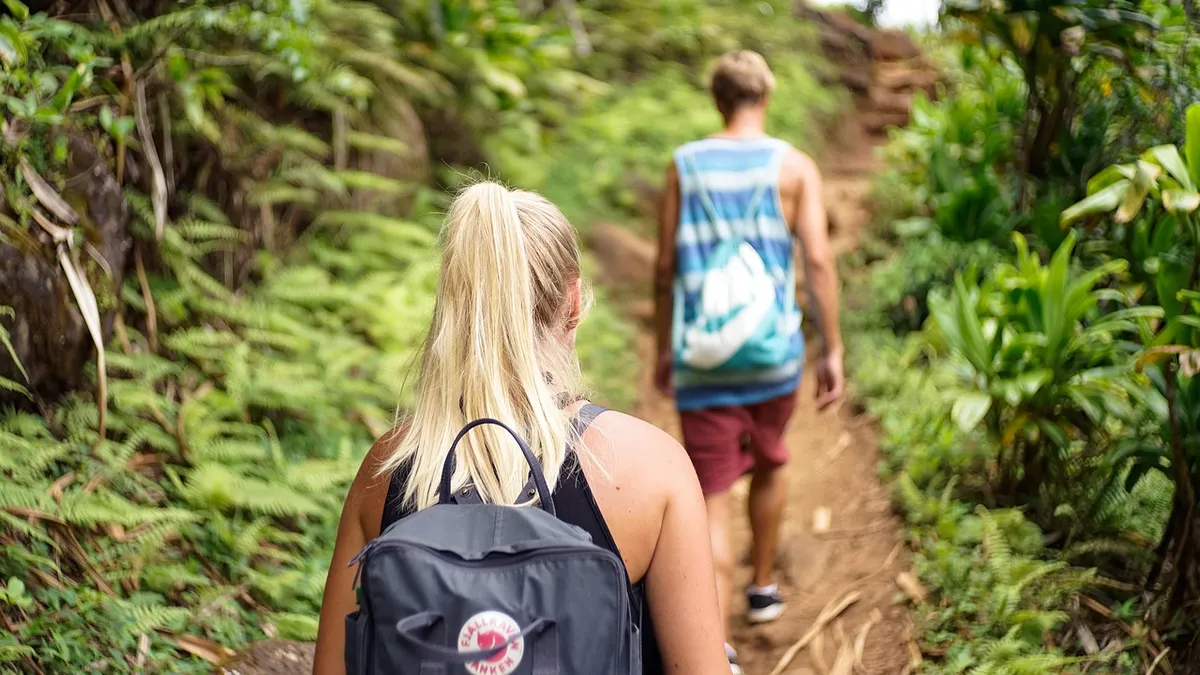
Hiking is popular here and the terrain near most cities has a recognisable character. Granite hills around the Klang Valley, limestone country further north, and jungle trails almost everywhere in between. What they share:
- Roots and rock steps, constantly, at ankle to knee height
- Mud that ranges from tacky to genuinely greasy after rain
- Slick rock — granite gets a fine algae film, limestone gets polished by traffic
- Water crossings, from ankle-deep streams to shin-deep after a downpour
- Heat and humidity at roughly 26–33°C, so your feet are damp before the first crossing anyway
None of that is a cushioning problem. It’s a traction, drainage and foot-strength problem. That’s the whole argument in one line.
Grip matters more than cushioning
On a trail, the thing that hurts you is a slip, not impact. A thicker midsole does nothing for that, and arguably makes it worse by putting your foot further from the ground and giving it more leverage to roll.
Lug depth is the spec to check
Plenty of barefoot shoes ship with a near-flat outsole designed for pavement and gym floors. Those are the ones that will put you on your backside on a muddy incline. What you want on a trail:
- Actual lugs, deep enough to bite into soft ground rather than pack up with mud
- Spacing between lugs, so wet clay can clear instead of turning the sole into a smooth pad
- A rubber compound the brand describes as grippy or sticky — trail-specific models generally use softer, tackier rubber than road models, at the cost of wearing out faster
Our brand directory tracks availability, price and fit rather than model-by-model outsole specs, so treat this as a pointer and not a spec sheet. The brands it flags for hiking and outdoor use are Vivobarefoot (import-only, roughly RM 560–1020), Freet (import-only), and Merrell, whose small barefoot line turns up in local outdoor stores on and off. Xero is import-only at roughly RM 380–660, though the directory positions it for running and travel rather than trails. Saguaro is the budget end at roughly RM 155–290 and ships to Malaysia in ringgit, and its range is mostly everyday and active models rather than dedicated trail shoes — fine on packed paths, under-tyred on greasy ones. Use code SUBIMPACT for 10% off there.
Whichever name you land on, check the outsole on the specific model. The brand badge doesn’t settle it.
The wet rock reality
We’re not going to pretend a minimal shoe solves wet limestone. Nothing does. Algae-covered granite after morning rain is slippery in boots, in trail runners and in barefoot shoes. What a thin sole gives you is earlier warning — you feel the foot starting to go while there’s still time to unweight it. What it doesn’t give you is friction that isn’t there.
Slow down on wet rock. That is the entire technique.
Drainage beats waterproofing in the tropics
A waterproof membrane is built for cold, wet places where the goal is to keep water out and the temperature is doing the drying. In Malaysia, water comes in over the collar at the first crossing and then has nowhere to go. You spend the rest of the day walking in a bucket.
Minimal shoes are usually built the opposite way — thin mesh, no membrane, minimal padding to soak up water. That’s an accidental advantage here:
- Water drains through the mesh instead of pooling
- There’s less foam and padding to hold moisture
- They dry faster overnight in a humid guesthouse, which matters on back-to-back days
The trade-off is that mesh lets grit in as easily as it lets water out. Expect to stop and rinse your shoes at a stream, and expect sand between your toes. Our guide to barefoot shoes for Malaysia’s weather covers the drying and odour management side in more detail.
Leeches, thorns and things that get in
Thin uppers are thin uppers. Two honest cautions:
Leeches. They’ll find their way into any shoe. Low collars and open mesh make it easier. Leech socks pulled over the shoe and up the calf are the standard local answer and they work regardless of what’s underneath. Check your ankles at every rest stop.
Sharp debris. A minimal sole transmits everything, including the sharp bits. Most of the time this is just information. Occasionally it’s a stone bruise that ends your day. If a trail is known to be rubbly or you’re moving fast downhill, that’s a real argument for more sole under you.
When a thicker minimal shoe is the right call
There’s a middle ground that a lot of barefoot purists skip past. A trail-specific minimal shoe — still zero drop, still a wide toe box, still flexible, but with a thicker lugged outsole and sometimes a rock plate — covers most Malaysian day hiking better than either extreme.
| Terrain | Sensible choice | Why |
|---|---|---|
| Packed jungle path, dry | Everyday minimal shoe | Grip demands are low, comfort is high |
| Roots, mud, moderate gradient | Lugged minimal trail shoe | Lugs matter; ground feel helps foot placement |
| Wet granite or limestone scrambles | Lugged minimal trail shoe, moving slowly | Sole compound and patience do the work |
| Loose, rolling rock and scree | Conventional trail shoe or boot | Ankle takes repeated hard corrections |
| Multi-day, heavy pack | Boot you already trust | Load changes everything about foot loading |
| Long river-heavy route | Quick-dry minimal shoe or dedicated water shoe | Drainage beats everything else |
When you honestly want a boot
Minimalism isn’t a religion. Take the boot when:
- You’re carrying a heavy multi-day pack. Added load goes through your feet on every step, and your ankles are correcting for it constantly.
- The ground is loose and rolling. Whether stiff boots actually prevent ankle sprains is genuinely contested, and we’re not going to pretend to settle it — but a rolled ankle two hours from a trailhead is a bad place to be testing a theory.
- You’re not adapted yet. This is the big one, and it’s a foot problem, not a shoe problem.
Build the feet before you take them out there
A trail is the worst place to discover your feet aren’t ready. Uneven ground demands far more from the small stabilising muscles than a footpath does, and it does it for hours with no option to stop.
Before minimal shoes go on a real trail, you want to be comfortably walking all day in them on roads and in the office, and ideally a few months past the point where your calves complain. The 30-day foot strength challenge is a reasonable on-ramp, and the common transition mistakes post covers the failure pattern almost everyone hits — doing too much, too soon, and blaming the shoes.
Also worth reading first: barefoot walking technique, because sustained trail descents are where a heel-strike habit tends to catch up with you.
Two practical notes:
- Size for swelling. Feet swell in the heat and swell more over a long day. If you’re between sizes, our sizing guide says go up, and that goes double for trail use.
- Budget honestly. Most decent trail-minimal shoes are import-only. Run the numbers in the import cost calculator before you get attached — a EUR 120 shoe with EUR 15 shipping lands at roughly RM 732 once SST and processing are added, which is a different decision from the sticker price.
If pain is involved rather than ordinary soreness, see a physio or doctor. Shoes are footwear, not treatment.
The Bottom Line
Minimal shoes are a legitimate choice for Malaysian day hiking, and on rooty, uneven jungle ground they’re arguably better than a stiff boot — you place your feet more accurately when you can feel what you’re standing on. The catch is that the “barefoot” part isn’t what makes them work. The outsole does.
Check the lugs. Prioritise drainage over waterproofing. Bring leech socks. Slow down on wet rock. And if you’re carrying a heavy pack over several days, or heading somewhere loose and rolling, take the boots — that’s not a failure of the minimal approach, it’s just the right tool.
Adapt on easy ground first. The trail will still be there in three months.