Barefoot shoes survive Malaysian humidity if you get three things right: dry them in shade with the insoles pulled out, rotate at least two pairs so no shoe goes back on a foot while damp, and store them where air moves rather than in a closed cabinet by the door. Thin, unlined uppers soak through fast in a downpour, but they also dry fast. The rain is rarely what kills a pair. The next 24 hours shut inside a warm, humid box is.
Most shoe care advice assumes a climate with a dry season. Malaysia doesn’t have one. Between 26 and 33°C year round, constant humidity and downpours without warning, a shoe here never gets the long dry rest a care label quietly assumes — and that matters more for barefoot shoes than for chunky trainers: less material, less lining, often no membrane between your sweat and the outside. If you paid import prices for the pair, care isn’t housekeeping; it’s protecting money already spent.
Why Malaysian Conditions Are Harder Than the Care Label Assumes
Three things stack up:
- Rain volume. A downpour soaks a thin mesh upper through in the time it takes to get from the car to the door. No lining, no membrane, not much material to hold water off.
- No drying window. Humid air can’t pull much more moisture out of a wet shoe. A pair that would dry overnight somewhere dry can still be damp inside here long after you’d expect it to be finished.
- Enclosed storage. The standard shoe cabinet by the door — doors shut, no ventilation, tiled floor — is close to ideal conditions for mould.
Then add sweat, most of which ends up in the insole.
Drying: The Part Most People Get Wrong
Don’t do these
- Direct sun. Prolonged heat and UV can soften the adhesives bonding upper to outsole, harden rubber and fade dyed fabric. Twenty minutes won’t destroy a shoe; repeated afternoons on a hot porch will.
- Clothes dryer, hair dryer on hot, any heater, a parked car. Same problem, faster.
- Newspaper, then forgetting about it. Wet paper stops absorbing.
Do this instead
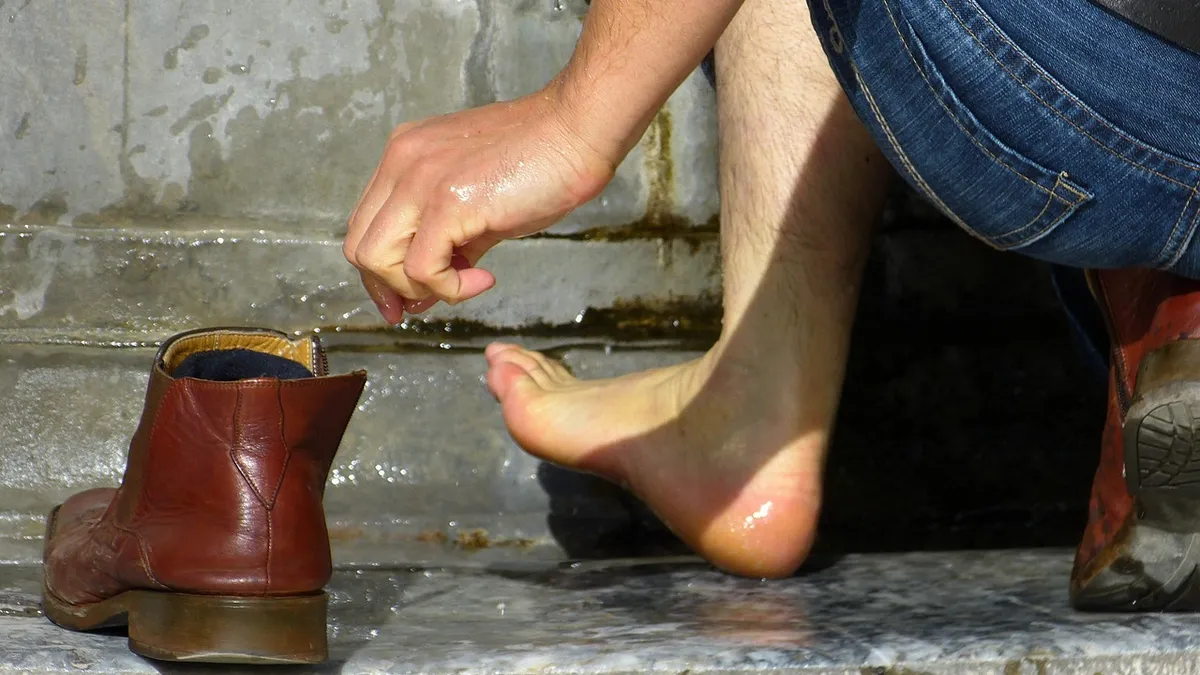
- Pull the insoles and laces out as soon as you get inside. The insole holds most of the water and, left in, keeps the shoe wet from within. Blot the footbed with a dry towel — press, don’t twist.
- Open the upper as wide as it will go so air can reach the toe box.
- Stuff with newspaper or kitchen towel, then change it after 30 to 60 minutes. That first change takes out the bulk of the water, and it’s the step people skip.
- Point a fan into the opening. A desk fan on low, aimed into the shoe, is the single biggest improvement you can make. Moving air beats warm air.
- Use the aircon room. Air conditioning dehumidifies, so an aircon bedroom overnight beats a porch.
What dries fast and what doesn’t
We haven’t measured drying times and won’t invent a chart — the answer depends on your fan, your room and how soaked the shoe got. The ordering holds regardless:
- Knit and mesh. Soak through immediately, dry fastest by a clear margin.
- Canvas. Soaks through quickly, dries noticeably slower than mesh.
- Vegan leather (PU). Surface repels water, seams let it in, dries slower again.
- Full leather. Wets slowly, then holds that water longest of the lot.
A fan beats still air every time. If it’s leather and you need it tomorrow, assume you won’t get it.
Washing: Match the Method to the Upper
Knit, mesh and canvas. The easiest. Insoles and laces out, lukewarm water, a drop of mild detergent, soft brush, rinse, fan-dry. On dark canvas expect some colour to move, so test on the heel first.
Vegan leather (PU). Don’t soak it. Wipe with a damp cloth and mild soap, then a dry cloth. PU coatings can crack or peel when repeatedly saturated, and nothing reverses that.
Full leather. Wipe only, never submerge, and dry slowly in shade — leather dried fast in heat tends to stiffen. Leather is the worst choice for daily monsoon wear anyway.
The machine-wash question
Some models, kids’ shoes especially, are sold as machine washable. If the brand says so, believe the brand over generic advice.
If you’re washing anyway: mesh laundry bag, cold water, delicate cycle, lowest spin, no dryer. The risk isn’t the fabric. It’s the glue line where upper meets outsole, and the hammering the drum gives a soft, unstructured shoe.
Mould: The Fuzz on the Shoe Rack
Mould shows up as white, grey or greenish fuzz, usually on leather and PU first, and inside the shoe where it’s darkest.
- Take the shoes outside. Not over the kitchen sink.
- Brush it off dry with an old toothbrush. Wiping wet mould smears spores deeper into the material.
- Wipe the area with diluted white vinegar or isopropyl alcohol on a cloth. Test a hidden spot first if the upper is dyed.
- Dry completely with a fan before the shoes go near storage.
- Fix the storage, or it returns in weeks.
Two caveats. Mould exposure can matter for people with asthma or allergies, so wear a mask if you’re sensitive — and if it’s affecting your breathing, that’s a conversation for a doctor, not a shoe blog. And if mould has gone deep into midsole foam rather than sitting on the surface, you probably won’t get it all out.
Odour
Smell isn’t dirt. It’s generally put down to bacteria feeding on sweat trapped in the shoe, which is why cleaning the outside does nothing for it.
- Take the insoles out every day, not just when they’re wet, and dry them flat after washing.
- Baking soda inside overnight, then shaken out, absorbs a fair amount.
- Thin socks or toe socks keep sweat out of the shoe in the first place, which our hot weather guide covers.
- Once smell soaks into midsole foam it may never fully leave. Rotation prevents that; nothing reliably reverses it.
Rotation: Two Cheap Pairs Beat One Expensive Pair
If you own one pair and wear it daily, it never fully dries. That’s the whole problem in one sentence.
This is a genuine argument for the budget end. Two pairs of Saguaro at roughly RM 155-290 each, alternated so each gets a full day to dry, will plausibly give you more total wear than one imported pair worn daily. That’s an inference from the drying problem, not a comparison we’ve run — but a shoe that never fully dries is always degrading. Compare what’s around in the brand directory or the Saguaro catalogue. Premium imports at RM 560-1020 aren’t a bad buy, but as your only pair here they’re asked to do something no shoe does well, and the landed cost breakdown shows what that pair really costs.
Rotation also means you handle each pair regularly, which is how you spot wear before it becomes a hole.
Storage in a Humid House
- Open rack beats closed cabinet. If the cabinet has doors, leave them ajar.
- Off the floor. Tiles hold cold and condensation.
- Silica gel packets in each shoe — save the ones from packaging or buy in bulk. They saturate, so replace them periodically. Bamboo charcoal bags last longer.
- Not in the original box long term, and never in a plastic bag. Both trap moisture against the shoe.
- A dehumidifier or camera dry cabinet is the gold standard, though overkill for most.
- Buy shoes with removable insoles where you can. Glued-in insoles aren’t a dealbreaker, but they dry slower and can’t be washed or replaced on their own.
When a Pair Is Actually Done
Thin soles wear out faster than cushioned ones, and that’s not a defect. A barefoot outsole is a few millimetres of rubber where a cushioned trainer has several times that stack height, so it has far more to lose before you notice. Less rubber, less margin.
Signs the pair is finished:
- You feel gravel sharply through spots that used to feel fine.
- Tread smoothed flat, usually at the outer heel or under the forefoot.
- A thin, translucent patch or an actual hole in the outsole.
- The upper separating from the sole. Repeated wet-dry cycles are hard on adhesives, so this shows up here more than in dry climates.
- The upper stretched enough that your foot slides inside on push-off.
How many kilometres is that? We don’t know, and neither does anyone quoting a figure at you. Note when you bought each pair and let the wear tell you.
The Bottom Line
- Drying beats cleaning. Almost every humidity problem — mould, smell, glue failure — is a drying problem.
- Insoles out, fan on, shade not sun. That’s the whole routine.
- Match the wash to the upper. Knit and canvas can be scrubbed; PU and leather get wiped, not soaked.
- Two pairs in rotation solve more than any product you can buy.
- Open storage, silica gel, off the floor. The closed cabinet is where shoes go to grow mould.
- Watch the outsole, and don’t trust anyone quoting a mileage number.
None of this makes a barefoot shoe last forever here. It just stops you throwing away a usable pair a year early because it smelled.